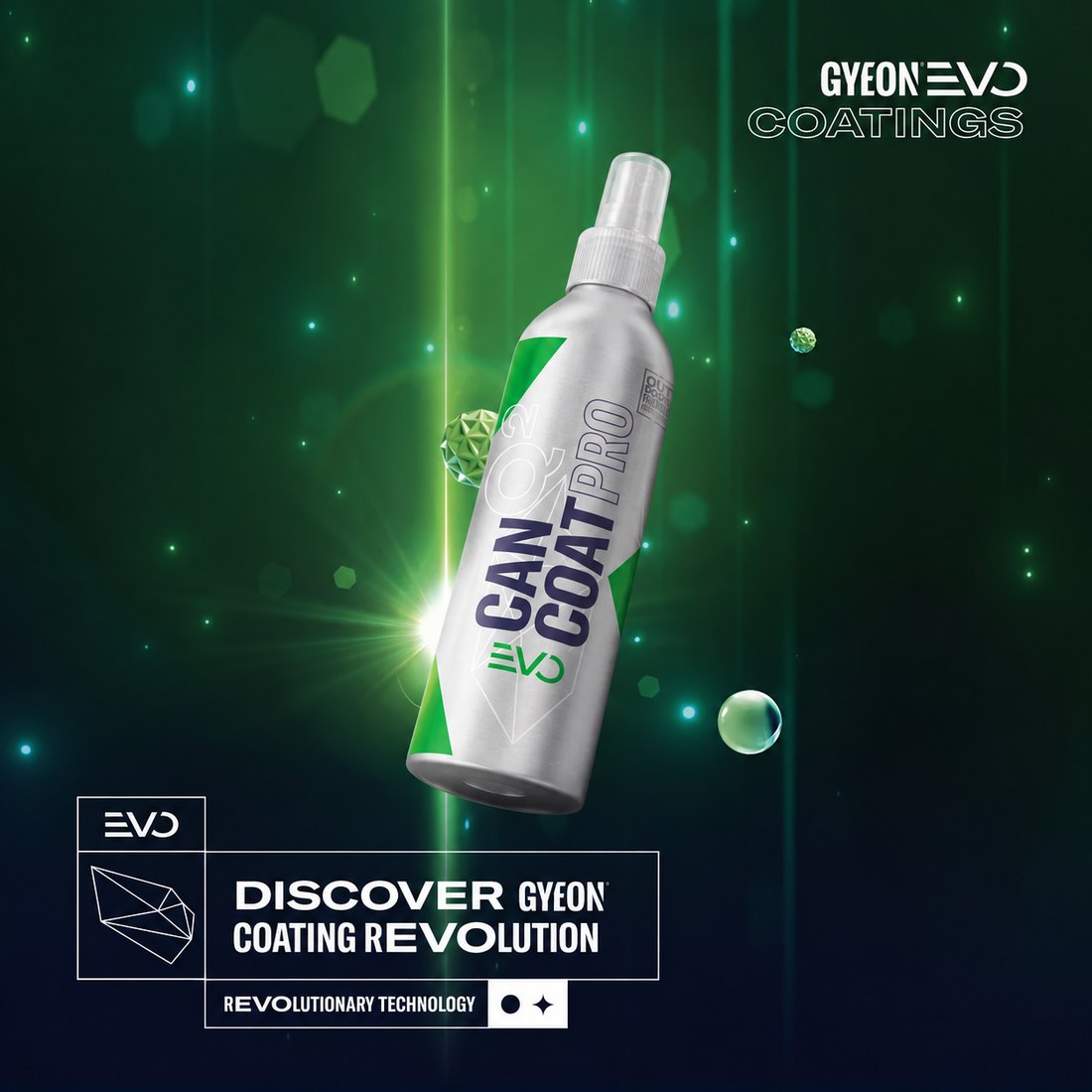
Cancoat Pro
- Fast spray & wipe application
- Works on paint, plastic, rims & glass
- Strong hydrophobic water beading
- UV & chemical resistance
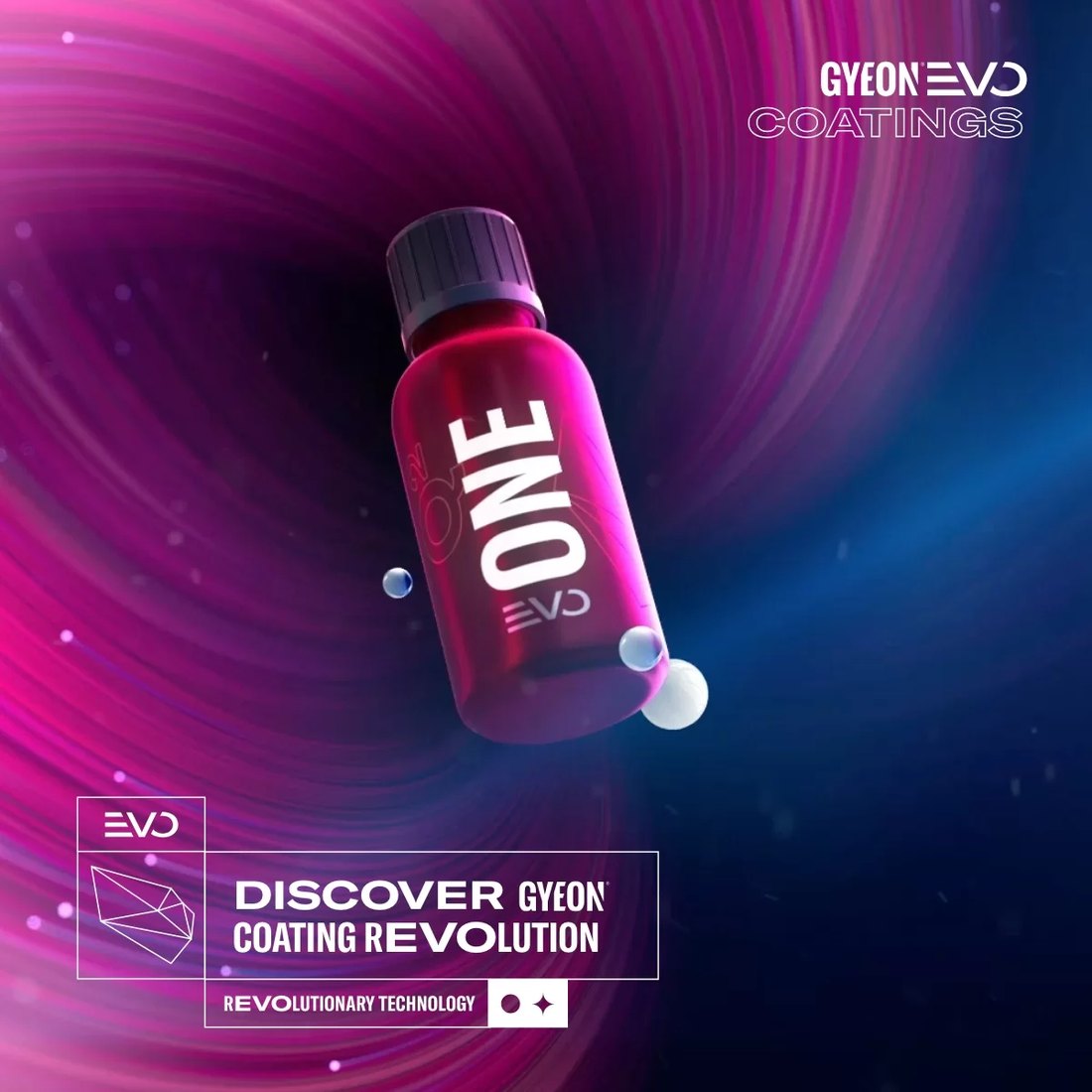
Gyeon One
- Single-layer coating, Q²M Cure included
- Balanced beading, gloss and self-cleaning
- pH 2–11 chemical tolerance
- 30 / 50 / 100 ml bottles
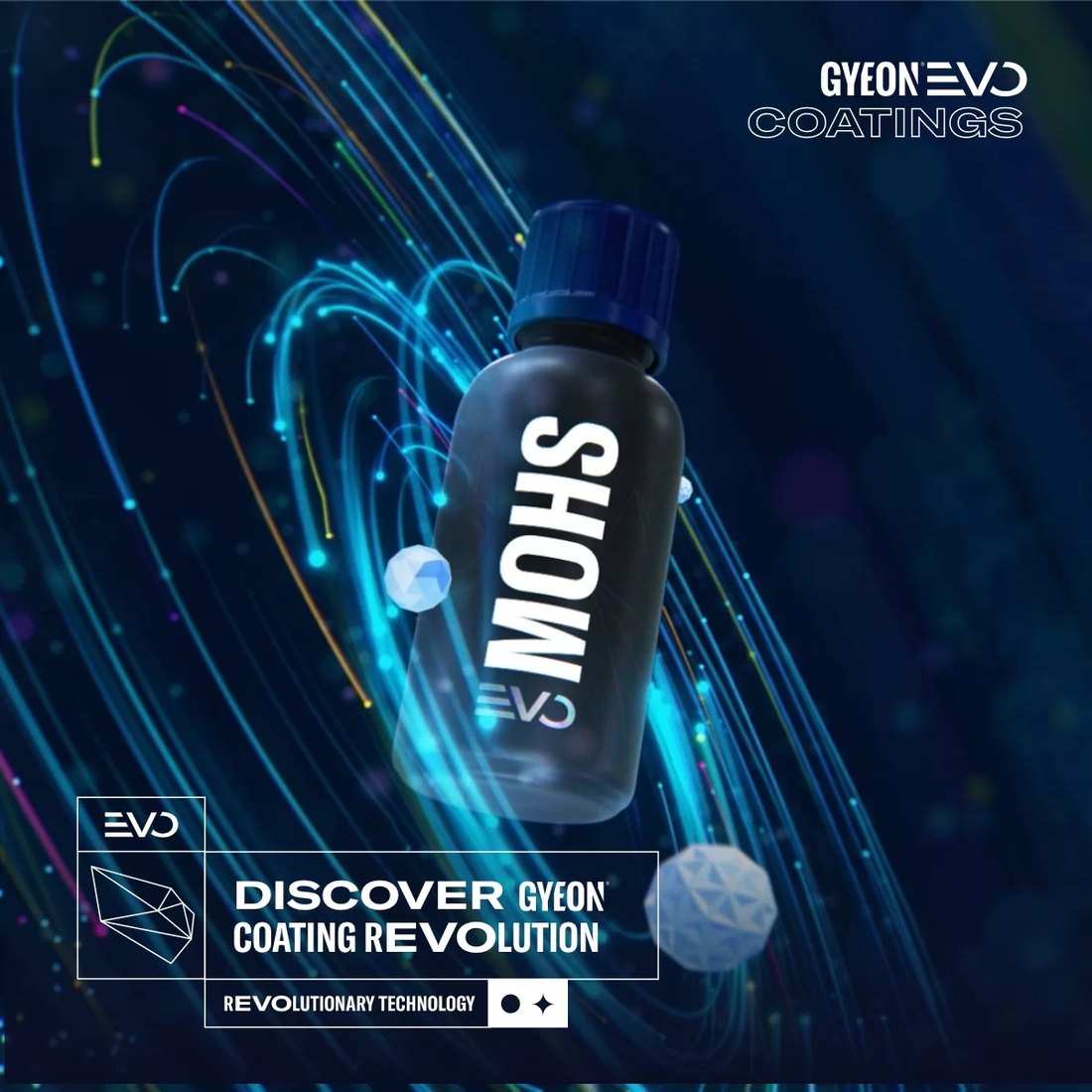
Gyeon Mohs
- Fluoro-modified polysilazane formula
- 1-layer application, no second coat needed
- Outstanding durability & self-cleaning
- Superior gloss depth & slickness
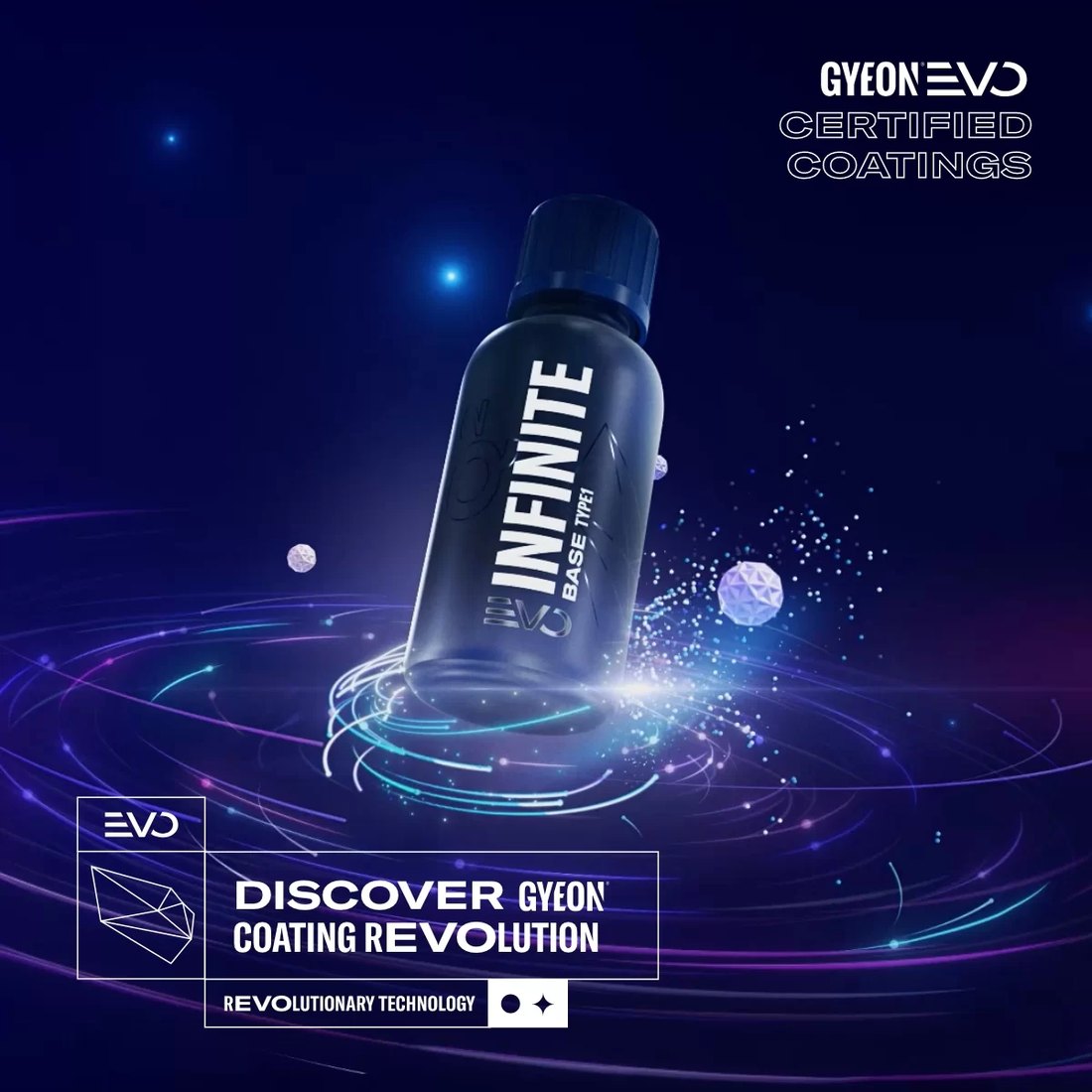
Gyeon Infinite
- Multi-layer professional system
- Strongest chemical & scratch resistance
- Two steps: a base layer, then a top coat
- Backed by Gyeon Infinite Warranty Program
Infinite goes on in two steps. First a base layer — the bottle shown here, Infinite Base Type 1 — then a top coat chosen for your paint. The two together are the coating; neither is the finished job on its own.
Infinite is the only one here that is built rather than poured. Mohs matches it on every performance figure and goes on from a single bottle, which is why it is our most popular coating — if that is what you want, we will tell you so. Infinite adds the second step, the matched top coat and the Gyeon Infinite Warranty Program, and in our hands it finishes harder and slicker than anything else we fit.
Wash it every one to two weeks. If the car sleeps outside, make it weekly. A coating stops dirt bonding to the paint — it does not stop dirt landing on it.
Come in every two months if the car lives outdoors or covers serious mileage. Rain dries on the paint and leaves mineral spots behind. Caught early we lift them in minutes. Left for months they etch in, and then the only fix is the machine.
Every visit: wash, dry, a full inspection, and a fresh top coat on the body. Clay, water-spot removal, glass coating and wheel decontamination are added when the car needs them — not as a matter of routine.
Your package includes a set number of these visits. After those, the same service continues at our standard maintenance rate.
Spinning brushes put fine scratches into the coating. Hand wash only, at a place you trust.
They are acidic and they work fast in this heat. Get them off the same day.
Water dries before you can dry it, and that is exactly how spots form. Wait until the panel is cool.
The coating is still curing. Water only.

If it is still there after a week, bring the car back. It usually means the coating sits unevenly across the wiper path, and we re-level that band at no charge. And if that still does not settle it, we change the treatment on that screen until it does — you will not be left with a windscreen you have to live with.
We suggest a good beam-type blade with ordinary rubber. We would avoid silicone blades on a coated screen: they lay down a water-repellent film of their own, and stacking two repellent layers can streak.
What it did do is take the damage instead of your paint. On an uncoated car those minerals etch straight into the clear coat, and that is a respray, not a polish. On yours they have etched into the coating, which is the layer we can replace. That is the job the coating was doing.
Polishing removes the coating on those panels, so our price always includes re-coating them. Past three or four panels it usually works out better to renew the whole car: fresh coating everywhere, warranty starting again.
Coating price depends on vehicle size and paint condition assessment. Get in touch for a quote.